
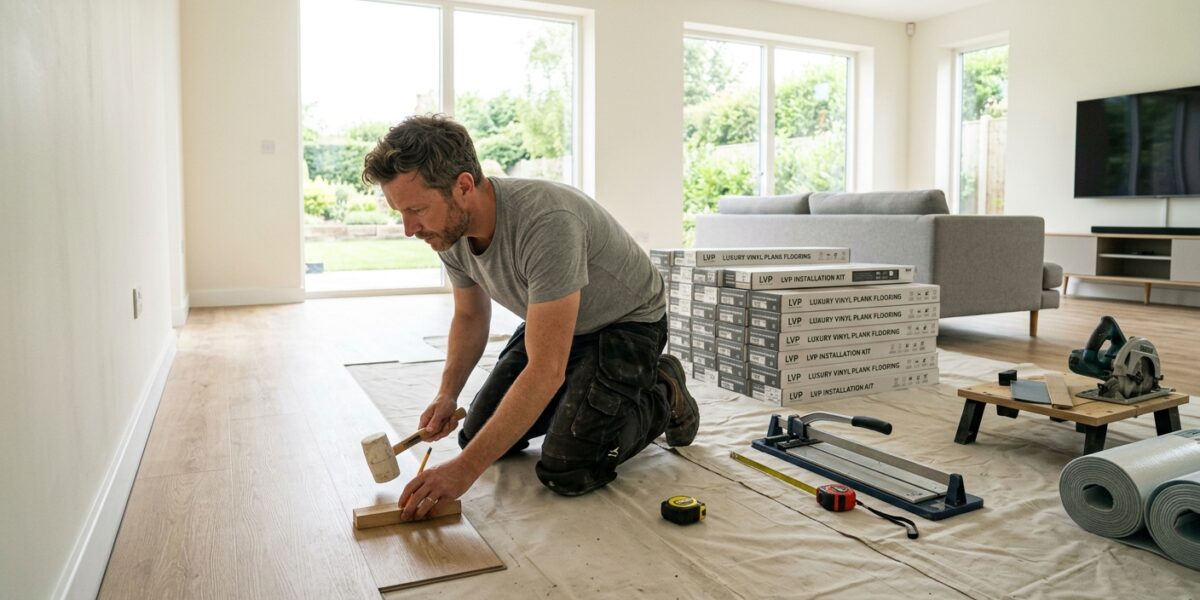
Thinking about new floors? It’s actually the vinyl plank flooring installation cost that counts and definitely not what’s on the sticker on the box containing samples from the hardware store. Vinyl plank flooring, being one of the top picks by homeowners these days, is easy to understand why.
You have the look of wood, with no worries about water damage, unlike genuine hardwood floors. They’re ideal for kitchens and bathrooms where it gets messy. The cost will depend on several factors including quality of the planks, size of the area, labor, and condition of the subflooring.
What is the Cost of Installing Vinyl Plank Flooring
Now here is the truth: between $3 and $12 per square foot, installed. There is quite a range there, so let’s try to refine it. Most mid range jobs with a decent subfloor land around $4.50 to $8 per square foot.
For a broader breakdown of flooring project expenses, check out our flooring installation cost guide.
Basic planks run $2 to $4 per square foot for materials alone. Once you start looking at rigid core options like WPC or SPC, thicker wear layers, or those ultra realistic embossed textures, the price climbs fast.
Labor tacks on another $1.50 to $5 per square foot depending on where you live and how the install goes. Simple room, easy job, lower end. Tricky layout or a rough floor underneath, expect the higher end.
Floating Versus Glue Down Labor
Click lock floating floors go in faster, which usually means cheaper labor. Glue down is a different animal. It needs adhesive and a lot more prep work on the subfloor, and that extra effort shows up on your invoice.
Vinyl Plank Flooring Installation Cost by Room Size
Want a quick gut check on your budget? Just multiply your expected price per square foot by the room size. Here is a cost breakdown by project size:
| Project Size | Estimated Installed Cost |
| 100 sq ft | $500 to $1,200 |
| 250 sq ft | $1,250 to $3,000 |
| 500 sq ft | $2,500 to $6,000 |
| 1,000 sq ft | $4,500 to $12,000 |
| 1,500 sq ft | $6,750 to $18,000 |
These are just rough figures, not an exact quotation. A flat subfloor and a boxy room keep you near the low end. Stairs, fancy planks, or a floor that needs work will push things up.
What Actually Drives the Price Up or Down
A few things behind the scenes decide where you land in that range.
Flooring Quality
Cheaper planks save you money now. Thicker, rigid core products cost more upfront but tend to hold up better if you’ve got kids, dogs, or just heavy foot traffic every day.
Subfloor Condition
Vinyl plank wants a clean, dry, mostly flat surface to sit on. If yours has dips or damage, you’re looking at patching or leveling compounds before anyone even opens a box of flooring.
Room Layout and Stairs
Big open rooms go fast for installers. Kitchens, bathrooms, and especially stairs slow things way down with all the cutting, fitting, and specialty trim work involved.
If you’re comparing different flooring options for your project, read our epoxy flooring cost guide to learn more about epoxy flooring costs.
The Costs Nobody Warns You About
The quote you see online almost never covers everything. The stripping of the existing flooring (carpet, tiles, or laminate) will take more effort as well as additional cost for disposal.
Then there is sub floor repair, moisture barrier installation, transition strips, baseboard, and stair nose installation all separate charges. None of it looks huge on its own, but it adds up quickly across a whole house.
One more thing people forget: material waste. Order 5 to 10 percent extra for a standard room, more if you’re doing a diagonal or herringbone pattern.
For tips on maintaining indoor air quality during home renovations, read the EPA’s guide to indoor air quality when remodeling your home.
Should You DIY It or Call a Pro
Click lock LVP is genuinely one of the easier flooring types to install yourself. If your subfloor’s already flat, going the DIY route can save you a real chunk of change.
That said, glue down flooring, oddly shaped rooms, and staircases are a different challenge. Get it wrong and you’re dealing with trapped moisture or visible seams, which usually costs more to fix than hiring it out would have in the first place.
How to Get an Honest Quote
For all signatures, ask the contractor to detail the cost of materials, labor, waste removal, underfloor prep work, and trim work for each specific item. While this might be an extra chore, this is the only way to do a comparison between estimates.
A lowball quote sometimes just means something got left out. Grab two or three itemized estimates and you’ll start to see what’s actually typical in your area.
Frequently Asked Questions
- What is the average cost per square foot?
Most homeowners land somewhere between $4.50 and $8 per square foot installed, materials and labor combined. - Can vinyl plank be installed over existing flooring?
Generally, yes, provided that the existing surface is flat and dry. It is just necessary to ensure that there is enough clearance in height between doors and cabinets, due to the addition of the new layer. - Does subfloor condition affect vinyl plank flooring installation cost?
Definitely. Leveling or moisture treatment can tack on several extra dollars per square foot. - How long does professional installation take?
It takes one day for a single room, while for the entire house it could take two to three days. - Is vinyl plank flooring worth the money long term?
For most people, yes. It’s durable, low maintenance, and handles moisture way better than hardwood. - What’s the cheapest way to get new flooring in?
Basic click lock planks, installed yourself, on a subfloor that’s already level. That combo saves the most. - Does new flooring help when selling a house?
It generally does. Fresh, durable flooring tends to make a home show better and reads as a plus to buyers.
Conclusion
At the end of the day, your vinyl plank flooring installation cost isn’t just the price tag on the planks. Materials, labor, subfloor installation, demolition, and even those tiny little finishing details that add up.
Just ask for a few itemized quotes, do an apples-to-apples comparison, and you won’t get that nasty surprise bill. Ready for real prices on your project? Request your free contractor quote today.

3 Comments