

Before starting your search for outdoor space construction, consider this vital question, what is the real deck installation cost including all hidden expenses? The majority of homeowners pay between $4,000 and $24,000 for the professional construction of a new deck with large premium jobs regularly topping that range.
A lot of online deck calculators will give you a broad price range. But there are few that give you insight on what could make your price range so much higher than expected. Examples on what could make your price range skyrocket; bad soil conditions, permits, or subgrade issues
Factors Affecting Deck Installation Cost
Several elements are taken into account when determining your final price:
- Size: The larger the square footage, the bigger the amount of materials (lumber, connectors, footings) that will be needed to complete the job.
- Material: Pressure treated lumber is the cheapest to install, but it requires more maintenance and has a shorter lifespan. Hardwoods, composites, and PVC are more expensive but highly durable and low maintenance.
- Site conditions: Eroded hillsides or rocky areas will see extra excavation charges, while the removal of an existing deck adds another line item to the invoice.
- Permits and inspections: Most municipalities require decking permits, and fees are often determined by your local government.
- Structural variance: Additional costs are standard for multi-tiered decks and structures that require reinforced footings.
What Is the Average Deck Cost Based on Size
The easiest way to estimate average cost per square foot is to consider the size of your future deck. Note that the figures below only include the cost of a basic ground level structure and that adding height or multiple levels will increase the cost significantly.
| Deck Size | Total Installed Cost |
| 10 by 10 feet | $4,500-$6,500 |
| 12 by 12 feet | $6,250-$9,100 |
| 12 by 20 feet | $9,550-$14,150 |
| 16 by 20 feet | $11,800-$17,750 |
| 20 by 20 feet | $13,600-$20,800 |
Also note that smaller jobs tend to include more expenses per square foot due to the higher proportion of fixed costs such as delivery and installation fees.
Decking Material Cost and Longevity
Material choice generally affects the final cost of deck construction significantly. Note that the numbers below represent material cost per square foot and that the final invoice will depend on the combination of square footage, labor, and expenses.
- Pressure Treated Wood: $15 to $25 per square foot, 10 to 15 years, annual sealing
- Cedar or Redwood: $25 to $40 per square foot, 15 to 20 years, periodic staining
- Composite: $35 to $60 per square foot, 25 to 30 years, occasional washing
- PVC: $45 to $75 per square foot, 30+ years, requires soap and water
- Exotic Hardwood: $40 to $85 per square foot, 50+ years, occasional oiling
Wood vs Composite Lifespan Evaluation
While cheaper wood options allow you to get a lower initial price, you will also incur additional yearly expenses associated with sealing or staining. Over the lifetime of the structure, composite, or vinyl alternatives might prove cheaper than traditional lumber options.
Labor and Structural Expenses
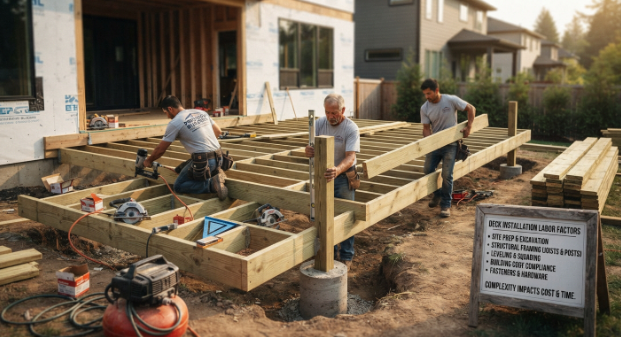
The cost of labor tends to constitute 30 percent to 50 percent or more of the total price depending on the complexity of your jobs and the region you live in. In general, you can expect additional expenses of approximately $4 to $35 per square foot. This category also includes post hole digging, footing and ledger installation, or framing.
Raised and second story structures require more posts, reinforcements, stairs, and railings increasing the final cost substantially. Building a ground-level deck avoids the expense of extra support beams and elevated railing system.
Hidden Expenses Associated with Deck Construction
There are also a few expenses that tend to be ignored during the initial research phase. Ask your contractor about the following pricing adjustments:
- Stairs add framing, treads, and railings and require additional labor
- Different railing option affects the final cost significantly
- Lighting, seating, or pergola addition all impact the final price
- Existing deck removal comes with its own set of expenses
How to Reduce Deck Construction Cost
The most efficient ways to cut costs are to simplify the design and seek multiple bids. Before permits are pulled, think about changing from a multilevel design to a simple rectangle with no stairs.
- Get at least three detailed estimates from different contractors.
- Build it in the fall or winter, when many contractors are less busy
- Finish the frame first, then wait to add such features as lights and seating until you see how the deck looks.
Hiring Professionals vs DIY
While building your own deck will save you the expense of paying a professional, proper assembly requires an understanding of framing, subgrade preparation, and local building code. A poorly constructed deck can result in a serious safety hazard.
In addition to your own labor, consider the cost of rental equipment, concrete, connectors, permits, and material waste when comparing the cost of hiring a contractor versus attempting the project yourself.
The difference in price between a licensed and insured contractor and an unlicensed handyman is often less than it seems. Having a professional take care of inspections and required approvals can be well worth the expense.
How to Get an Estimate for Deck Installation
A comprehensive breakdown should include the cost of deck size, materials, framing, footings, stairs and railings, demolition expenses, permits, labor, and cleanup. Ask about the approach used in case of poor subgrade or faulty framing.
An itemized quote provides a reliable basis for negotiations and ensures that you do not get surprised when new prices are presented in greater detail. It also helps compare the services of different companies.
Frequently Asked Questions
- What is the average deck installation cost in 2026?
The majority of homeowners pay between $4,000 to $24,000 for the professional construction of their new deck with average projects in the region of $8,000.
- Are permits and inspections included in the installation cost?
The costs of permits and inspections are not included in the price per square foot or hourly rate since the expenses vary greatly depending on the location and type of structure.
- Is it worth paying additional fees for composite decking?
For the vast majority of homeowners, the additional cost of composite or vinyl decking is justified by the benefits of reduced maintenance and extended lifespan.
- How much does the installation labor add to the cost of decking per square foot?
Installation labor should add approximately $4 to $35 to the cost of material per square foot depending on the complexity of the job.
- Will a raised or second level deck cost more to install?
Additional costs are inevitable due to the increased size of the railing, the additional posts, and the extra reinforcements needed for the additional levels.
- Can I really reduce my cost by attempting a DIY build?
Such projects require advanced skills, tools, and equipment. Most homeowners will not take advantage of all the opportunities to reduce their expenses and the initial advantage vs professional will be significantly reduced.
- What is the best time of year to build or refinish a deck?
Jobs are cheapest in the off season (late fall and early winter) because contractors have less demand and are more available to cut prices.
Conclusion
Your final deck installation cost will be determined by five factors: its size, materials, labor, permits, and additional features. Comparing the prices of the installation services and the lifetime maintenance cost of materials will help you stay within the budget.
The numbers stated in this guide are only a reference. It is better to contact at least three local contractors and ask for an itemized quote to secure the best price for the selected project size and materials. Now that you know what to look for, contact us to request a free, no-obligation quotation.
