
Warning Signs You Need a New Roof for Your Home This Year
Every homeowner fears the day their roof starts breaking down without warning. But catching the signs you need a new roof early saves you thousands of dollars in repair bills. Water damage, rotting wood, and emergency fixes cost far more than a simple planned replacement.
Your roof protects everything inside your home but it will not last forever. Learning what to look for gives you enough time to plan and save money. Acting early always costs less than waiting until things get worse.
Your Roof Age Matters Most
Most asphalt shingle roofs hold up well for 20 to 30 years based on your local weather. But if you bought your home and have no idea when the roof was last installed, pull out your home inspection report. Any roof past the 20-year mark needs a professional check every year even if it looks fine on the outside.
Roof Lifespan by Material
Different roofing materials wear out at different speeds so knowing your type helps a lot. Here is a simple breakdown of how long each common type usually lasts:
- Asphalt three-tab shingles: 15 to 20 years
- Architectural shingles: 25 to 30 years
- Metal roofing: 40 to 70 years
- Tile or slate roofing: 50 years or more
If someone added new shingles on top of an old layer to save money, that roof will only last around 20 years. That extra layer holds in heat and moisture and slowly breaks down the wood structure from the inside.
Shingle Damage Is a Red Flag
Shingles are the first thing standing between your home and bad weather. If they start failing, the whole roof system below them is at risk of water damage. Walk around your house and take a good look at the shingles from the ground level.
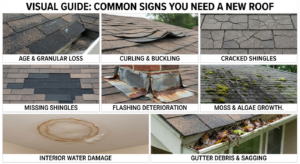
Common Shingle Warning Signs
Look out for these shingle problems the next time you do a visual check:
- Curling or cupping edges from too much heat or poor airflow in the attic
- Cracked or brittle shingles from years of hot summers and cold winters
- Missing shingles that leave the wood deck under them open to rain
- Granule buildup in your gutters which means your shingles are wearing out fast
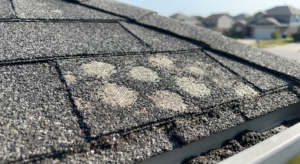
Granules protect shingles from sun damage so losing too many of them speeds up the breakdown of the asphalt layer. Once they are mostly gone, the shingles can no longer keep water out properly.
Signs You Need a New Roof Indoors
Most people only check the outside but what is happening inside your home tells just as much. Go up to your attic on a bright sunny day and look for any light coming in through the boards. If light gets in, so does rain, cold air, and even small animals.
Interior Clues to Check Right Now
These indoor warning signs are easy to overlook but very worth catching early:
- Brown stain rings on your ceiling or on walls in the upper floors
- Paint peeling or drywall bubbling near where the walls meet the roofline
- A musty or damp smell in rooms that sit right under the roof
- Wet or stained attic insulation after a heavy rain or storm
Do not jump to blaming your plumbing if you see ceiling stains before you check the roof first. Both of these problems get much worse fast if you do not find and fix the source of the moisture.
Structural Warning Signs
A roof that sags or dips is not just ugly but a real safety concern that needs attention right away. It usually means the wood boards, rafters, or supports under the roof got weak from too much moisture or heavy weight sitting on them. This kind of damage is dangerous and needs a professional to look at it as soon as possible.
The best way to spot a sagging roofline is to step back across the street and look at your home. Check it from a few different angles to pick up any dips or waves in the roofline. If anything looks uneven, call a roofer before the next rainstorm hits.
Flashing and Gutter Deterioration
Roof flashing is the thin metal that covers the joints around your chimney, skylights, vents, and roof valleys to keep water out. But if it rusts, cracks, or shifts out of place, water starts finding its way straight into your home. This is actually one of the top causes of indoor water damage that most people never think to check.
What to Inspect Around Flashings
When you check your flashings and gutters, keep an eye out for these common problem spots:
- Rust or corrosion showing up on the metal flashing around your chimney
- Cracked or missing sealant around your skylights or vent pipes
- Gutters pulling loose from the fascia board that runs along your roofline
- Overflowing gutters packed with debris causing water to back up onto the roof
Bad gutters and damaged flashing usually show up together so always look at both at the same time. Fixing them early stops water from reaching the wood framing underneath before serious rot sets in.
Rising Energy Bills Signal Trouble
A roof that is wearing out stops keeping your home at a steady temperature as well as it used to. If the insulation gets wet or the roofing material starts falling apart, your heating and cooling system has to run longer to keep up. So if your energy bills keep going up for no clear reason, get your roof checked along with an energy inspection.
Most homeowners never think of their roof when they see a spike in their utility bills. But a poorly ventilated or failing roof traps heat in summer and lets cold in during winter. Getting the roof fixed often brings those bills back down on its own without changing anything else.
Moss and Algae Growth
Green patches or dark streaks running down your shingles are more than just an eyesore for your home. Moss holds water against the shingle surface which speeds up granule loss and causes rot to form underneath. Algae looks like long dark stains running down the slope and it points to the same kind of trapped moisture problem.
Both of these grow best in shady damp spots on the roof that do not get much direct sun. They come back quickly after you clean them off if you do not fix the wet conditions causing them in the first place. In rainy or humid areas, moss and algae can take several years off the total life of your roof.
When to Replace Instead of Repair
Keep patching the same spots over and over and you are really just putting off a replacement you are going to need anyway. If you have fixed the same area more than twice already, the roofing material around it is probably failing too. Temporary fixes buy you a little time but they do not solve the bigger problem underneath.
The 25 Percent Rule Explained
The 25% rule is a simple standard that roofers use to help homeowners decide between patching and replacing. If more than one quarter of your roof needs work, a full replacement usually makes more financial sense. Here is how to use this rule when you are trying to make that call:
- Figure out how much of your total roof surface is damaged or worn out
- If it is over 25%, ask for both a repair quote and a full replacement quote
- Think about how old your roof is because older roofs almost always tip toward replacement
- Remember that patched or layered spots often hide more damage sitting right below them
Past that 25% mark, what you spend on patches often gets close to what a full replacement would have cost you anyway.
Should You Replace Without a Leak
A lot of homeowners wonder if they really need to replace a roof that is not dripping water yet. But if your roof is old and showing several warning signs at once, the answer is yes. By the time a leak shows up inside your home, water has already been sitting somewhere in the structure for a while.
Replacing your roof before a leak starts keeps your attic insulation, wood framing, and interior walls safe from hidden water damage. It also gives you time to shop around for a good contractor and pick a less busy time of year. Scheduling in fall or early winter usually costs less because fewer people are booking roofing jobs then.
Frequently Asked Questions
How do you know when it is time to replace your roof? Look for several warning signs showing up together like a roof over 20 years old, curling or missing shingles, stains on your ceilings, a sagging roofline, or energy bills that keep climbing for no clear reason.
How many years does a roof usually last? Asphalt shingle roofs hold up for around 20 to 30 years while metal roofs can last anywhere from 40 to 70 years based on the material and how well they are maintained.
What is the 25% rule in roofing? If more than 25% of your roof needs to be repaired, replacing the whole roof is usually the smarter and more cost-effective choice compared to just patching the damaged spots.
Should I replace my roof if it is not leaking? Yes. If your roof is near the end of its life and already showing physical warning signs, replacing it before a leak starts stops hidden water and structural damage from building up inside.
How much does it cost to fix a leaking roof on average? Small roof leak repairs usually run between $150 and $400 but if there is serious water damage or structural repairs needed, the total cost can go well past $1,500.
How often should you replace roof shingles? Basic three-tab asphalt shingles need replacing every 15 to 20 years while better quality architectural shingles can go 25 to 30 years if they are looked after properly.
Conclusion
Knowing the signs you need a new roof before things turn into a serious problem is one of the best things you can do as a homeowner. From worn shingles and clogged gutters to sagging wood and rising energy costs, the warning signs are right there if you take the time to look. Get a professional inspection done once a year and move quickly when you start seeing more than one problem at the same time. Replacing your roof at the right time keeps your home safe, holds its value, and saves you a lot of money compared to waiting for things to fall apart.
