
Ways Insurance Covers Roof Replacement Claims and Costs
When a storm hits your home, the first thing most homeowners ask is whether insurance covers roof replacement costs. The answer is yes but only in certain situations. Your policy type, the cause of damage, your roof age, and how you handle your claim all decide if you get a full payout or a denied one. This guide covers what most other articles miss so you know where you stand before you file anything.
When Homeowners Insurance Covers Roof Replacement
Your homeowners insurance treats the roof as part of the main structure of your home. Coverage applies when a sudden accidental event causes the damage. Not every situation qualifies and knowing which ones do can save you from filing a claim that gets rejected right away. Here are the most common situations where your claim will likely get approved:
- Wind and hail damage that breaks the roof or causes leaks
- Fallen objects like trees, branches, or storm debris
- Lightning strikes that crack the roof deck or start a fire
- Fire damage that burns through shingles or roof supports
- Sudden severe leaks caused directly by a covered storm event
The word sudden matters a lot in insurance language. If one storm causes the damage and you report it quickly your claim starts on solid ground. But problems come up when the insurer argues the damage built up slowly over time rather than from one single event.
When Insurance Denies Roof Replacement Claims
Not every roof problem leads to a paid claim and this is where most homeowners get caught off guard. Insurers look closely at what caused the damage and how long it has been going on. Honestly this is where most articles do not give enough detail and homeowners end up surprised after filing.
Wear and Tear
Say your roof is 18 years old. Shingles are curling. Granules are gone. Seams are coming apart. That is normal aging and not a storm claim. The adjuster comes out, takes photos of all that aging, and marks your claim as a maintenance issue. Denied. A lot of homeowners never figure out that the roof age was the reason before they even filed.
Neglect
If damage got worse over time because small repairs were ignored that falls under neglect. A small flashing problem that let water in slowly for two years is not a sudden covered loss. Your policy will not pay for it.
Excluded Perils
Flood damage is not covered under a standard homeowners policy. You need a separate flood insurance policy for that. Earthquake damage is also excluded in most states unless you add an endorsement. Some policies in high risk coastal areas leave out wind or hail entirely or add a separate deductible for those that can reach 1% to 5% of your home value. Read those exclusion pages because most people skip them and regret it later.
Replacement Cost vs Actual Cash Value Explained
This one difference controls how much money you actually get when your claim is approved. But most homeowners do not know which type of policy they have until after a loss and that is a real problem. Check your declarations page right now before you ever need to file.
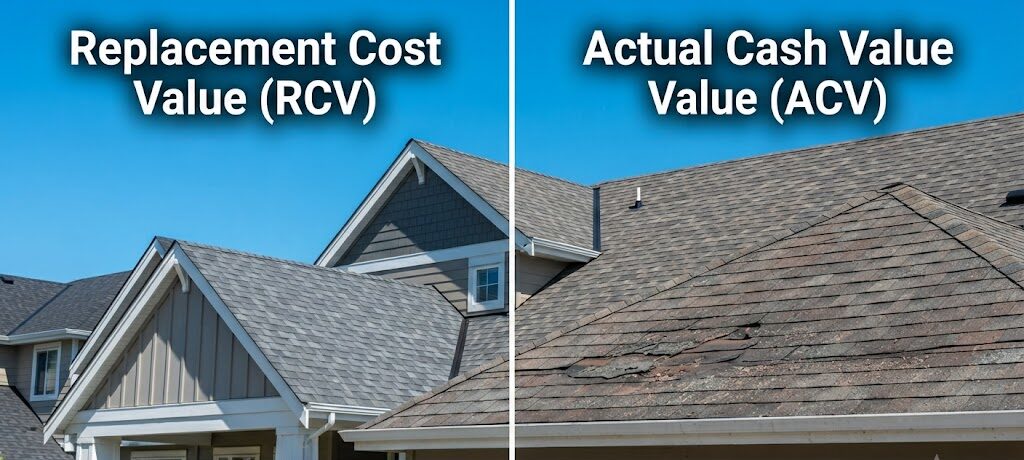
Replacement Cost Value (RCV)
Replacement Cost Value policies pay the full cost to repair or replace your roof using similar materials at today’s prices minus your deductible. So if a new roof costs $18,000 and your deductible is $2,000 you get $16,000. Simple and fair.
Actual Cash Value (ACV)
Actual Cash Value policies take depreciation into account. The insurer figures out how much useful life your roof had left and pays only that portion of the replacement cost. A 15 year old roof with a 20 year lifespan has used up 75% of its life. On an $18,000 replacement the check might only be $4,500 before your deductible. You cover the rest yourself. One homeowner in Texas got just $3,200 on a $19,000 roof job after ACV depreciation and she had no idea that was coming.
Some insurers quietly switch older roofs from RCV to ACV at renewal and that notice is often buried in paperwork most people throw away. Always check your declarations page and confirm which method covers your roof specifically, not just your home in general.
How Roof Age Affects Your Coverage
Roof age is one of the biggest factors in coverage decisions but most articles barely mention it. Once a roof passes 15 to 20 years old insurers start getting careful and their choices are usually not in your favor. Getting ahead of this before a storm hits is one of the smartest things a homeowner can do.
Here is what can happen at that age mark:
- The insurer may switch your roof from RCV to ACV coverage at renewal without much notice
- They may require a roof inspection before agreeing to keep your coverage going
- Some insurers refuse to renew your policy until the roof is replaced
- A few will only cover what is left of the roof useful life and not a full replacement
Does your insurer actually know your roof’s current condition? If not they may be making assumptions that hurt you when you file. Get a licensed contractor to inspect your roof and write a report before your next renewal. That report becomes strong evidence if the insurer later tries to say the damage was already there.
Insurance Cover Roof Replacement Step by Step
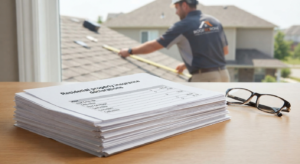
Knowing what to do before you need it is what separates a fair settlement from a short one. Most homeowners who get underpaid are not unlucky. They just did not know the process before the damage happened. Follow these steps in order and you give yourself the best shot at a full payout.
Step 1 — Document Everything Immediately
Before touching anything, take photos and videos of every angle of the damage. Get close shots of impact marks, missing shingles, bent flashing, and any water stains on the ceiling inside. Add timestamps to everything. This is your evidence if the insurer questions what happened.
Step 2 — Make Emergency Repairs
Put up tarps or board things up to stop more damage from coming in. Most policies say you have to limit further loss after an incident. Keep every receipt because those emergency costs are usually reimbursable.
Step 3 — Get an Independent Contractor Estimate First
Before filing your claim, bring in a licensed roofing contractor to look at and document the damage on their own. This gives you an unbiased picture of how bad it is and what it will cost. It also helps you decide if the damage is worth claiming or if paying out of pocket makes more sense given your deductible.
Step 4 — File the Claim Promptly
Most policies require you to report damage within a reasonable time. Waiting too long makes things complicated. When you file include your photos, the contractor estimate, and a clear simple account of when the damage happened and how.
Step 5 — Review the Adjuster’s Report Carefully
The insurer adjuster works for the insurance company not for you. Compare their estimate line by line against what your contractor said. Look for missing items, materials priced too low, or depreciation that does not seem right.
Step 6 — Use the Appraisal Clause if Underpaid
If you disagree with the settlement use the appraisal clause. Most homeowners policies have one. Both sides hire their own independent appraiser and if they cannot agree they pick a neutral umpire together. This process regularly gets homeowners a much higher payout without going to court.
Deductibles and the 25 Percent Rule
Deductibles and local building rules are two things most homeowners overlook completely until they are already deep in a claim. Both can significantly change how much money you end up paying out of pocket so it is worth understanding them before any damage happens.
Wind and Hail Deductibles
In states that get a lot of storms wind and hail claims often come with a separate higher deductible. These are usually percentage based and run from 1% to 5% of your home insured value. On a $400,000 home a 2% wind and hail deductible means you pay $8,000 before insurance covers a cent. Know this number before you file.
The 25 Percent Rule
Here is something most articles gloss over. When 25% or more of a roof is repaired or replaced many local building codes require the whole roof to meet current standards. That extra cost is covered by ordinance or law coverage but standard policies do not automatically include it. If you do not have that coverage, those code upgrade costs fall entirely on you and can add thousands of dollars to an already expensive job.
What Not to Say to Your Insurance Adjuster
What you say during the inspection becomes part of the claim record and the wrong words can quietly lower your payout. Most homeowners walk into this conversation unprepared and give away information that hurts them without realizing it. Be careful, stay factual, and keep it simple.
- Do not say the roof has always had that problem because that sets up pre existing damage before the adjuster even starts
- Avoid saying leak without making clear it was sudden or the adjuster may log it as an ongoing maintenance issue
- Do not agree out loud to any settlement number while the adjuster is still at your home
- Do not let an unlicensed contractor talk to your adjuster on your behalf
- Stick to facts, dates, and what you personally saw rather than guessing at causes
Because once something gets written into that report walking it back is much harder than most people expect.
Frequently Asked Questions
Will insurance pay to replace a roof?
Yes when damage comes from a covered peril like wind, hail, fire, or a falling object. However insurance will not pay when a roof fails because of age, neglect, or damage that builds up slowly over time. The cause of the damage is what decides whether a claim gets approved, not just the damage itself.
Will insurance cover a 20-year-old roof?
It depends on the insurer. Many carriers apply actual cash value to roofs older than 15 to 20 years which means they factor in depreciation and pay much less than full replacement cost. Some insurers also require a roof inspection before renewing coverage on an older home.
What is the 25% rule for roofing?
When 25% or more of a roof gets repaired or replaced in many areas local building codes require the entire roof to meet current standards. This can add a lot of cost to the project which is why ordinance or law coverage matters more than most homeowners realize.
What not to say to an insurance adjuster about your roof?
Do not imply the damage was already there before the storm, do not describe leaks as something that has been going on for a while, and do not agree verbally to any payout before you see the written estimate. What you say during the inspection goes into the official claim record and can limit what you can do later.
What is the most expensive part of replacing a roof?
Labor and replacing the decking underneath the shingles are usually the biggest costs especially if the wood is rotted or soaked through with water. Material choice also matters a lot because metal roofing and slate can cost two to four times more than standard asphalt shingles.
How to get insurance to pay for roof replacement?
Document all damage before you touch anything, get an independent licensed contractor estimate, file your claim quickly, and go through the adjuster report line by line. If the settlement is lower than it should be, use the appraisal clause in your policy instead of just accepting the first number they offer.
How much does insurance pay for roof replacement?
Under an RCV policy insurance pays the full replacement cost minus your deductible. Under an ACV policy the payout depends on how much useful life your roof had left after depreciation is applied. On an older roof the actual check can be a small fraction of what the real job costs.
Conclusion
Prepared homeowners get paid and that is just how it works. Knowing that insurance covers roof replacement only under specific conditions, understanding whether your policy is RCV or ACV, documenting damage before filing, and pushing back on low adjuster estimates are the four things that decide how your claim turns out. So check your declarations page today. Find out your deductible. Get your roof looked at by a professional before storm season starts. Getting ready before a loss happens is always more powerful than trying to fight a denial after it does.
