
Ultimate Roof Replacement Cost Breakdown and Price Guide
The average roof replacement cost in 2026 sits between $9,000 and $11,000 for a standard home. But that one number does not tell you the full picture. This guide covers everything that affects your final price including home size, material types from asphalt to slate, regional labor rates, tear off costs, decking repairs, permit fees, and how to save money without cutting corners.
You will also find a full cost breakdown by square footage for homes ranging from 1,500 to 3,000 square feet, a material by material price comparison, regional estimates across the US, and answers to the most common questions homeowners ask before getting quotes. If you want to know exactly what to budget and why prices vary so much from one home to the next this guide has every answer you need.
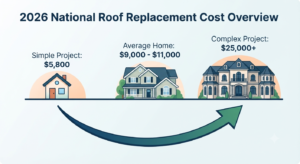
Average Roof Replacement Cost Overview
Before going into specific numbers it helps to understand the general price range most homeowners are working with. The overall cost of replacing a roof depends on several things working together at once and no two roofs are priced exactly the same way. That said the numbers below give you a solid starting point for budgeting.
The typical price range in 2026 breaks down like this:
- National average cost: $9,000 to $11,000
- Low end projects: $5,800 to $6,500 for small simple roofs
- Mid range projects: $10,000 to $18,000 for average sized homes
- High end or complex projects: $25,000 to $46,000 and beyond
Most contractors price roofing work by the square foot and rates generally fall between $4 and $11 per square foot installed. Labor alone makes up more than half of that total which is why two contractors can quote very different prices for the exact same job.
Roof Replacement Cost by Home Size
Home size is the most straightforward way to estimate your roof replacement cost before you get into materials or labor details. Bigger homes mean more roofing material, more labor hours, and more waste disposal. Most homeowners use their home square footage as the starting point even though the actual roof area is usually 20% to 40% larger due to pitch and overhang.
Here is what homeowners typically pay based on home size in 2026:
- Small home 1,000 to 1,500 sq ft: $5,000 to $10,000
- Average home 2,000 to 2,500 sq ft: $7,000 to $15,000
- Large home 3,000 sq ft and above: $15,000 to $30,000 and more
Cost to Replace a 1,500 Square Foot Roof
A 1,500 square foot home typically needs around 1,700 to 1,900 square feet of actual roofing material when you account for pitch and overhang. With standard asphalt shingles the job usually runs between $6,500 and $10,000. Metal or architectural shingles on the same size home can push that to $12,000 or more depending on the contractor and your region.
Cost to Replace a 1,600 Square Foot Roof
For a 1,600 square foot home expect to pay somewhere between $7,000 and $11,000 for a basic asphalt shingle replacement. The extra 100 square feet does not add a dramatic cost jump but material grade and local labor rates will shift the number noticeably.
Cost to Replace a 2,200 Square Foot Roof
A 2,200 square foot home sits right in the middle of the average range. Most homeowners in this category pay between $9,500 and $15,000 for a full replacement with standard materials. Premium materials like metal or tile can bring that number closer to $20,000 to $28,000.
Cost to Replace a 3,000 Square Foot Roof
Larger homes at 3,000 square feet or more see costs jump significantly. A straightforward asphalt shingle job on a 3,000 square foot home usually runs $14,000 to $22,000. If the roof has multiple slopes, valleys, skylights, or chimneys that number climbs fast.
Roof Replacement Cost by Material
Material choice is the single biggest variable in your total roof replacement cost after labor. Some materials are cheap upfront but wear out faster. Others cost more to install but last decades longer and can actually increase your home value. Here is a clear breakdown of what each roofing material costs per square foot and in total for an average sized home.
Asphalt Shingles
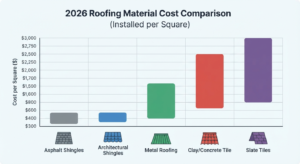
Asphalt shingles are the most common roofing material in the US and the most affordable. They cost between $3 and $6 per square foot installed and a full replacement for an average home runs $7,500 to $14,000. They last around 20 to 30 years with proper maintenance and work well in most climates.
Architectural Shingles
Architectural shingles are a thicker upgraded version of standard asphalt. They cost $4 to $6 per square foot installed with total project costs ranging from $7,500 to $16,000. They hold up better against wind and impact and carry a longer warranty than standard three tab shingles.
Metal Roofing
Metal roofing costs more upfront but lasts 40 to 70 years in many cases. Prices run from $5 to $16 or more per square foot installed and a full replacement typically falls between $7,500 and $40,000 depending on the metal type. Steel panels cost less while standing seam aluminum or copper roofing sits at the higher end.
Clay and Concrete Tile
Tile roofs are common in the Southwest and in warmer climates. Clay and concrete tiles cost between $7 and $25 per square foot installed and total project costs range from $10,500 to $62,500 for a full home. They are heavy and require roof framing that can support the extra load which sometimes adds structural cost too.
Slate Tiles
Slate is the most durable and most expensive roofing material available. It costs $10 to $30 per square foot installed and a full slate roof replacement can run anywhere from $22,000 to $70,000. The upside is that slate roofs can last 75 to 150 years when installed and maintained properly which makes the cost per year surprisingly reasonable over the long run.
Key Factors That Affect the Total Cost
Material and size are the two biggest drivers but they are not the only ones. Several other factors push your final number up or down and most homeowners do not hear about them until the contractor is already on the job. Knowing them ahead of time helps you compare quotes more accurately and avoid surprise charges.
Roof Pitch and Complexity
A steep roof is harder and more dangerous to work on. Contractors charge more for steep pitch roofs because the job takes longer and requires more safety equipment. Roofs with multiple slopes, valleys, dormers, chimneys, or skylights also cost more because each of those features requires extra cutting, flashing, and sealing time.
Tear Off and Disposal
Most contractors will not just layer new shingles over old ones especially if the decking underneath needs inspection. Tearing off the old roofing material typically adds $1 to $5 per square foot to your total cost. For a 2,000 square foot roof that can mean an extra $2,000 to $10,000 just for removal and disposal.
Decking and Structural Repairs
When the old roofing comes off contractors sometimes find rotted or damaged decking underneath. Replacing roof decking adds $2 to $4 per square foot to the project on top of the regular replacement cost. If the structural supports are compromised that cost can go even higher. This is one of the most common reasons a roof project comes in over the original estimate.
Permits and Building Codes
Most areas require a permit for a full roof replacement. Permit costs vary by location but typically run $150 to $500. In areas with strict building codes like California or parts of the Northeast the requirements for underlayment, fasteners, and fire ratings can also push material costs up noticeably.
Roofing Contractor Experience and Warranty
A roofing contractor with a strong track record and a solid workmanship warranty will charge more than a low bid contractor with no guarantees. The extra cost is usually worth it. A roof is not the place to find the cheapest option available and a failed installation can cost far more to fix than the savings you got upfront.
Roof Replacement Cost by Region
Where you live affects your roof replacement cost just as much as what material you choose. Labor rates, local building codes, material shipping costs, and even climate all play a role in the final price. Here is what homeowners typically pay across different parts of the country.
- Northeast: $8,000 to $15,000 driven by higher labor costs and strict code requirements
- West Coast: $8,500 to $16,000 reflecting high cost of living and skilled trade wages
- Midwest: $6,000 to $12,000 generally the most affordable region for roofing work
- South: $5,500 to $11,000 lower labor rates but hurricane and storm resistant requirements can add cost in coastal areas
These are general estimates for 2026 based on average sized homes with standard asphalt shingles. Premium materials or complex roof designs will push any regional number higher.
Labor Costs and What They Cover
Labor is the part of your roof replacement bill that surprises most homeowners the most. It is not just someone nailing shingles down. A qualified roofing crew handles tear off, deck inspection, underlayment installation, flashing work around chimneys and vents, material placement, and cleanup. All of that takes time and skilled hands.
Labor typically accounts for 60% or more of your total roof replacement cost. On a $12,000 project you might be paying $7,000 or more just for the crew. Rates vary by region and contractor but most roofing labor falls between $1.50 and $3 per square foot on top of material costs. Getting at least three quotes from licensed local contractors is the most reliable way to know if a price is fair for your area.
How to Save on Roof Replacement
A full roof replacement is a big expense and most homeowners want to find ways to bring the cost down without cutting corners on quality. There are a few legitimate ways to reduce what you pay without putting your home at risk.
Timing Your Replacement
Late fall and winter are generally the slowest seasons for roofing contractors. Many offer discounts during these months to keep their crews working. Getting your replacement done in November or early winter rather than peak summer can save 10% to 15% in some markets. However if you live in a region with harsh winters check that the contractor can still install the material properly in colder temperatures.
Get Multiple Quotes
Never accept the first quote you receive. Getting three to five quotes from licensed local contractors gives you a realistic picture of what the job should actually cost in your area. Make sure each quote covers the same scope of work so you are comparing apples to apples not just the bottom line number.
Check Insurance Coverage First
Before paying anything out of pocket check whether your homeowners insurance covers part or all of the replacement. Storm damage, hail, wind, and fire are commonly covered perils. If the damage qualifies your insurer may cover most of the cost minus your deductible. Our full guide on insurance coverage for roof replacement walks through the claims process in detail.
H3: Consider Material Alternatives
If premium materials like metal or tile are outside your budget architectural shingles offer a strong middle ground. They cost only slightly more than standard asphalt but last longer and carry better warranties. In many situations they are the best value option available.
Frequently Asked Questions
Is $30,000 too much for a roof? Not necessarily. On a large home over 3,000 square feet with premium materials like metal or tile $30,000 is within a reasonable range. For a standard asphalt shingle job on an average sized home it would be on the high side and worth getting additional quotes.
What is the most expensive part of replacing a roof? Labor is the biggest cost driver making up more than 60% of the total bill on most projects. After labor the material itself especially premium options like slate or standing seam metal adds the most to the final number.
What is the cheapest time of year to get a new roof? Late fall and winter are typically the most affordable times to schedule a roof replacement. Contractor demand drops and many offer discounts to keep crews busy during the slower season.
How much is 1,500 sq ft of shingles? For a 1,500 square foot home expect to pay roughly $6,500 to $10,000 for a standard asphalt shingle replacement including labor. Architectural or premium shingles on the same home will push that to $10,000 to $14,000.
How much does roof replacement cost per square foot? Most roof replacements run between $4 and $11 per square foot installed. Basic asphalt shingles sit at the lower end while metal, tile, and slate materials land at the higher end of that range.
How much does it cost to replace a roof on a 1,600 square foot house? A 1,600 square foot home typically costs $7,000 to $11,000 for a standard asphalt shingle replacement. Premium materials can bring that number to $13,000 to $18,000 depending on material choice and your location.
How much does it cost to replace a roof on a 2,200 square foot house? Expect to pay $9,500 to $15,000 for a standard replacement on a 2,200 square foot home. Metal or tile roofing on the same home generally runs $20,000 to $28,000.
How much does it cost to replace a roof on a 3,000 square foot house? A 3,000 square foot home with asphalt shingles typically costs $14,000 to $22,000. Complex roof designs, steep pitches, or premium materials can push that to $30,000 or beyond.
How much does roof replacement cost near me?
Regional costs vary widely. The South and Midwest tend to run lower at $5,500 to $12,000 while the Northeast and West Coast average $8,000 to $16,000 for a standard home. Getting local quotes is the only accurate way to know your specific market price.
Final Thoughts on Roof Replacement Cost
There is no single number that covers every home and every situation but now you have a real picture of what drives roof replacement cost up or down. Size, materials, labor, region, and roof complexity all work together to set your final price. The smartest thing you can do before getting quotes is understand what your roof actually needs, check your insurance coverage, and compare at least three bids from licensed contractors in your area. A roof is a long term investment in your home and getting it done right the first time saves far more money than chasing the lowest bid.
